The stakes are no longer only rhetorical.
The question has run on sports radio for more than twenty years. The names change; the debate doesn't. Some commentators cite the Rooney Rule's symbolic value, others its stagnant outcomes. It is, on the face of it, the same conversation as in 2003.
Of ten head-coach vacancies filled in January 2026, one went to a Coach of Color. The league entered the 2026 season with three Black Head Coaches — the same number as in 2003, when the firings of Tony Dungy and Dennis Green prompted Cyrus Mehri and Johnnie Cochran Jr. to push the Rooney Rule into existence.

Photo: Erik Drost, 2021. CC BY 2.0.
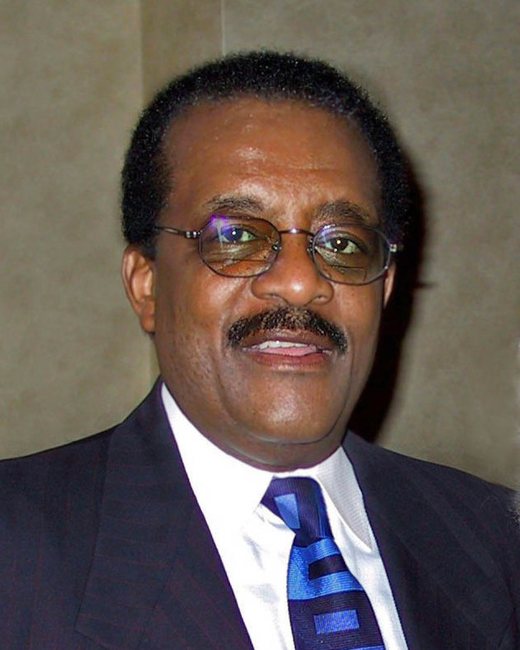
Photo: Mark Winograd. Public domain.
Three years that raised the evidentiary bar.
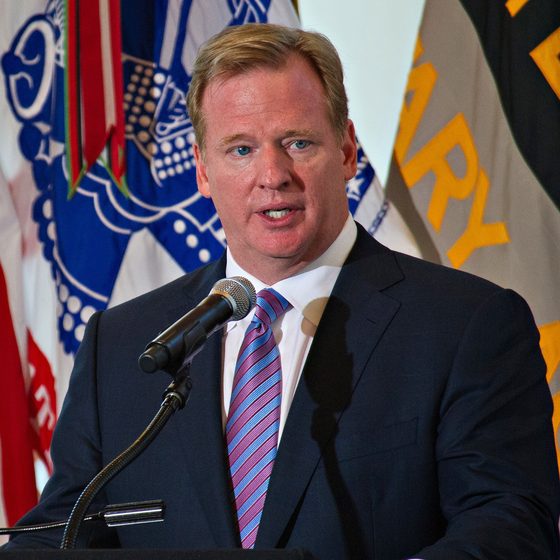
Photo: SSG Teddy Wade, U.S. Army, 2012. Public domain.
The debate is live. But the debate circles, because its participants treat representation at the top as the only number that matters. That number establishes that something is wrong. It leaves open where in the pipeline the gap is produced, and what would close it.
Two promotion mechanisms. Two ways each goes wrong.
People rise through organizations via two promotion mechanisms, and each can fail in two ways. Cross them and you get four distinct causes of the same gap — each requiring a different intervention. The framework is Rider & Reagans; we set it out in Achieving Diversity Through Equity Analytics (AACSB Insights, 2022).
Reading the arrows. Left to right along the top: sorting into playing position carries forward into the coaching position a new coach is assigned. Right to left along the bottom: disparate valuations amplify differential ones. Top to bottom in each column: the allocation cell precedes the valuation cell in a career.
-
 01 · YOUTH
A seven-year-old is assigned to running back, not quarterback — partly on the basis of ascribed identity.
High school football, 2003. Photo: SSgt Tony R. Tolley, U.S. Air Force. Public domain. -
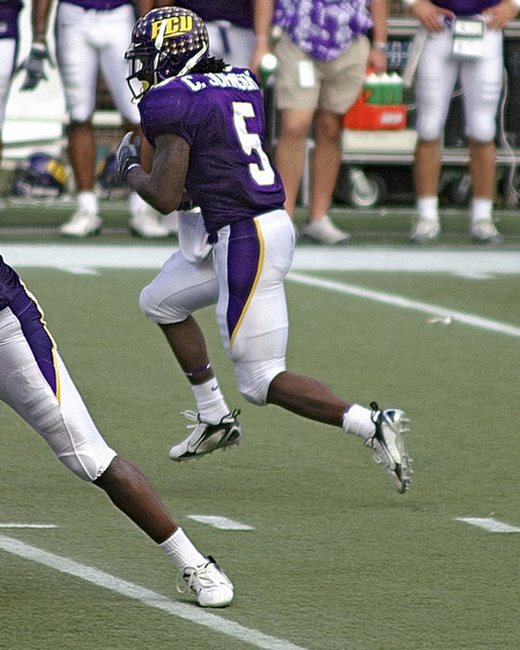 02 · COLLEGE
That playing assignment shapes his college position.
College running back, Hawaii Bowl, 2007. Photo: Mark Ramelb, CC BY-SA 3.0. Cropped under the same licence. -
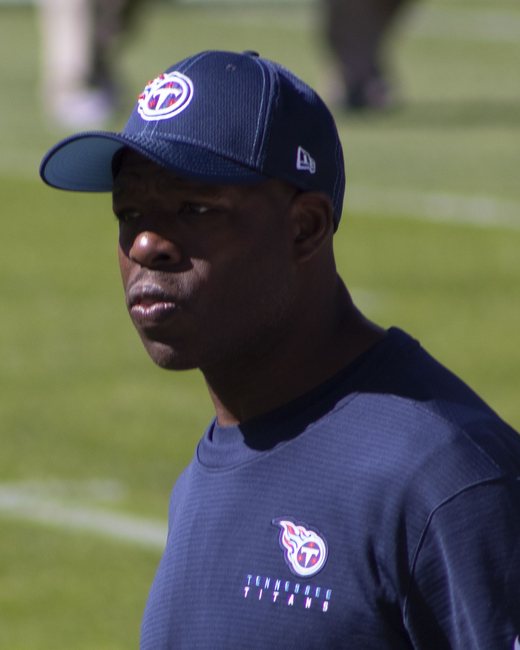 03 · FIRST JOB
His college position shapes his first coaching job.
Tony Dews, running backs coach, Tennessee, 2019. Photo: Chipermc, CC BY-SA 4.0. Cropped under the same licence. -
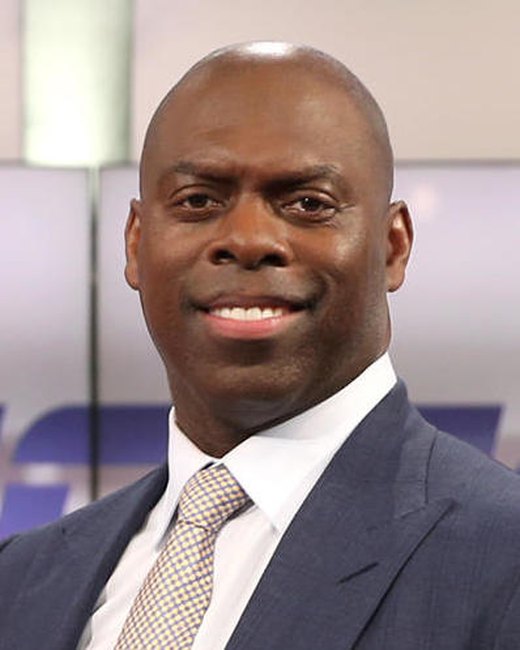 04 · COORDINATOR
His first coaching job shapes his odds of promotion to coordinator.
Anthony Lynn ran these rungs in order: running backs coach, then offensive coordinator at Buffalo and Detroit, then head coach at the Chargers. Photo: Ben Liebenberg, CC BY-SA 3.0.
The cells are not independent.
Ascribed identity enters early and is carried forward by cells that are neutral on their face. The photographs illustrate the rungs, not the people: no claim is made about any individual shown.
The two valuation cells also compound. A neutral preference for offensive experience raises the career return on positions that one group already occupies more often, so equally capable candidates accumulate unequal records of the credentials evaluators treat as evidence of readiness. Those thinner records then supply the ambiguity in which differential standards operate: where a candidate's dossier is sparser, evaluators lean more heavily on impressions formed from ascribed identity. In each cycle evaluators apply the standard to a record that earlier cycles already shaped, so a disparate valuation at one stage widens the room for differential valuation at the next.
Because valuations cover potential as well as realized contributions, they operate on both sides of the hiring line — on candidates being assessed for a job and on employees being assessed within one. That distinction is what determines how far the Rooney Rule can reach.
In the allocations row, and entirely pre-employment. It allocates interview opportunities: who enters the candidate pool, not who is selected from it.
Law professor N. Jeremi Duru argues it mandates opportunity, not outcome, and is non-zero-sum — teams may interview as many candidates as they like.
The objective is representation among the employed, but the rule reaches only the candidate pool. It is also why the rule, on its own, shouldn't be expected to close the head coach representation gap.

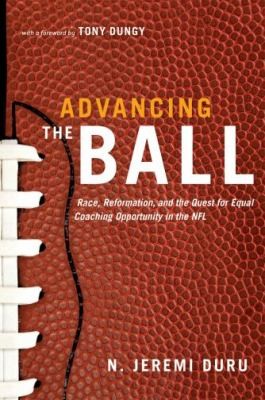
Advancing the Ball
N. Jeremi Duru, Professor of Law at American University, with a foreword by Tony Dungy. Duru traces the Rooney Rule from the litigation threat that produced it through its expansion, and he is the scholar who has argued most directly that its process-based design is what will let it survive post-SFFA challenge.
He is also one of the people we took the coordinator finding to in 2016.
Why the NFL is an unusually good laboratory.
Consider what the setting supplies. Dozens of standardized, objectively measured performance metrics, recorded at the team, unit, and position levels — for people who spend their careers moving among a bounded set of employers, on a hierarchy with the same three rungs everywhere: position coach, coordinator, head coach. Careers are observed publicly, in detail, over long horizons.
Few other settings offer any one of those properties. Almost none offer all of them at once. That combination is what makes it possible to hold constant what people actually do and still have variation left to examine.
With Jim Wade, Anand Swaminathan, and Andreas Schwab, we assembled career histories for 1,317 NFL coaches from 1985 through 2015 — roughly 10,000 coach-years of hand-coded data drawn from official NFL media guides.
Identity was coded by multiple raters from photographs and biographies, using U.S. Census categories. What matters for this analysis is not how coaches identify themselves but how they are perceived by the people making promotion decisions. The outcome we explain is a decision others make, so the relevant construct is ascribed identity.
We control for age, NFL and NCAA experience, playing and coaching positions, team tenure, college degree, winning percentage, 50-plus unit-level performance metrics, leadership and ownership changes, prior success, network ties, and the head coach's ascribed identity — with franchise, position, and year fixed effects throughout.
That depth makes apples-to-apples comparisons tractable: hold constant what coaches do, then ask whether equally situated White coaches and Coaches of Color advance at equal rates. What follows does exactly that, one step at a time up the ladder.
Allocation into different starting positions.
Coaching careers in the NFL begin with sorting. New coaches are typically assigned to coach the position they themselves played — and playing positions are, and long have been, racially stratified.
Careers begin where playing careers ended
In our sample, 63.7% of Coaches of Color first coached the position they played in college, against 45.5% of White coaches. That stratification flows forward into initial coaching assignments.
63.7% vs. 45.5%
Starting positions are not interchangeable
Defensive coordinator, offensive coordinator, and quarterbacks coach have historically produced head coaches at meaningful rates. Others have not. Coaches of Color disproportionately played running back, defensive back, and wide receiver; White coaches disproportionately played quarterback and offensive line.
Consider Jim Harbaugh's path
Played quarterback, coached quarterbacks, offensive coordinator, then head coach at Stanford, the 49ers, Michigan, the Chargers. A recognizable path.
Not a claim about Harbaugh, who is a great coach. A claim about the route: statistically, it is the one best positioned to produce a head coach. Coaches starting in running-backs or defensive-backs rooms rarely travel a comparable one.
The pattern persists beyond the first job
Coaches of Color hold lower-yield positions throughout their careers — what researchers call stacking.
Multiplying each position's probability of producing a head coach by the share of coach-years each group spends there quantifies the allocative disadvantage.
That is the allocative component of the gap, already substantial before we examine what happens inside each position.
Differential valuation within the same position.
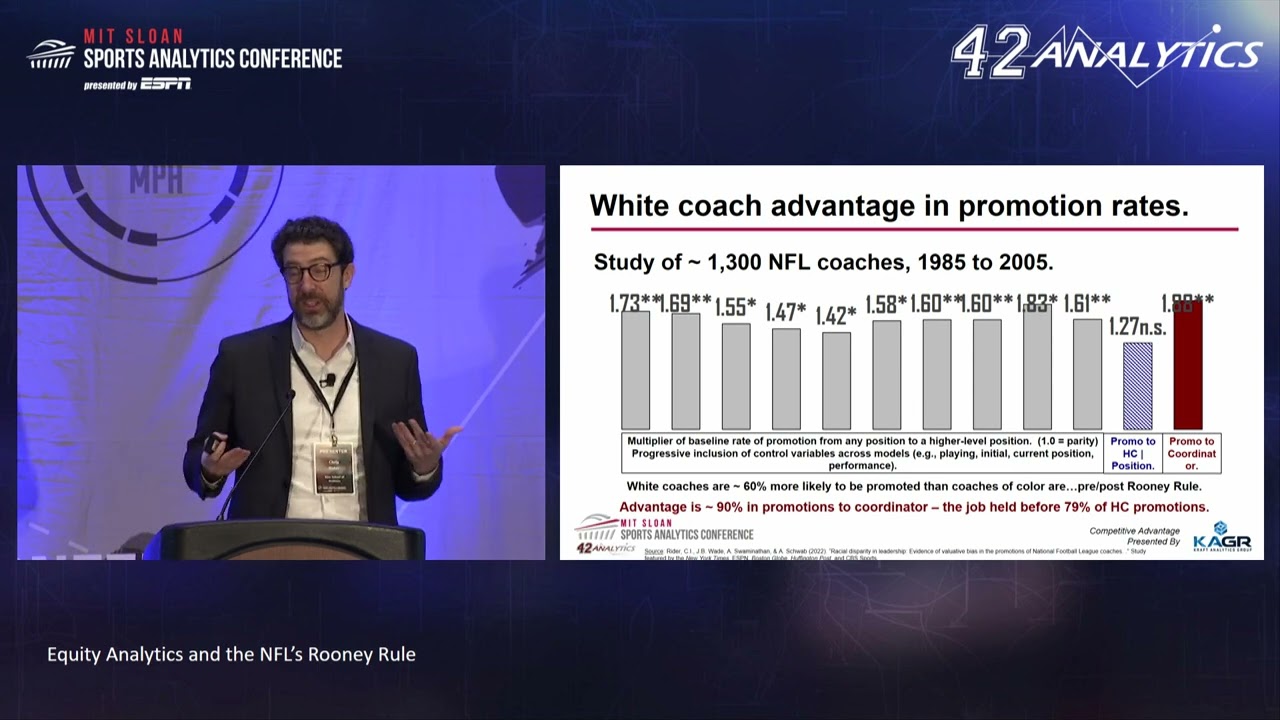
Allocations do not account for the full disparity. Holding constant position, experience, network ties, and objective performance, White coaches are 58–74% more likely to be promoted than comparably situated Coaches of Color, depending on the specification. The gap persisted after 2003, because the Rooney Rule targeted head-coach hiring — not the promotions that feed the head-coach pool.
One result that rarely enters the public debate: conditioning on current position, the estimated gap at the head-coach step falls to 1.36×. Few coaches make that transition, so the estimate is imprecise — it neither establishes parity at that step nor rules out a gap larger than 1.36×.
But most coaches do not reach coordinator.
The coordinator ranks are where the pipeline narrows. A coach who reaches them competes on level terms for the top job; a coach who does not is largely out of contention, whatever else is true of him.
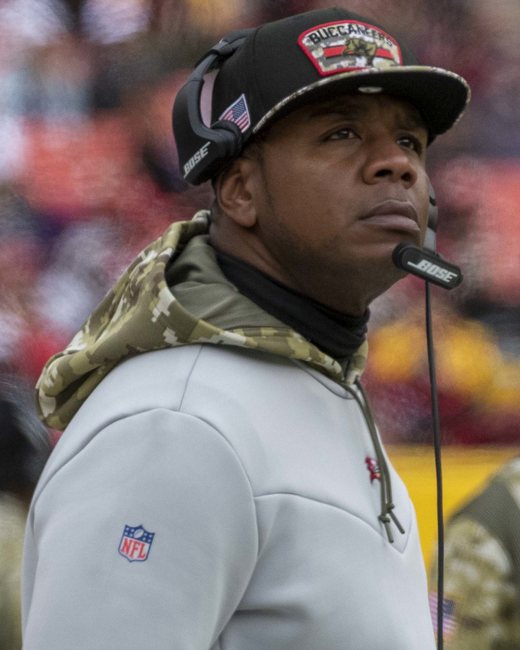
Photo: All-Pro Reels. CC BY-SA 2.0. Cropped; the crop is offered under the same licence.
The bottleneck is not at the top. It is one step below — where the Rooney Rule did not apply when it was adopted.
How the rule has changed since 2003 5 revisions
The Rooney Rule has widened repeatedly since adoption, in both the roles it covers and the candidates who satisfy it.
Sources: Rooney Rule · ESPN · Yahoo Sports · ABC News
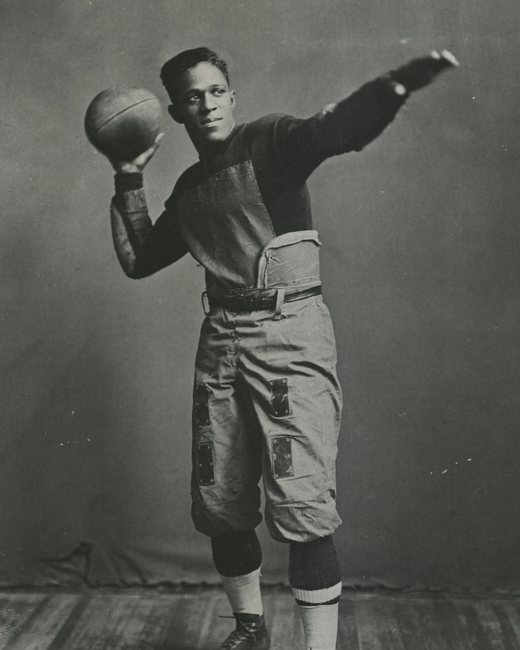
Photo: unknown photographer, published 1916. Public domain.
The table below begins in 1989, with Art Shell. It is the modern era as TIDES defines it — and the gap between Pollard and Shell is why the modern era carries a separate name.
Related. As of February 2025, the Associated Press reported that 11 of 32 franchises had never had a Black Head Coach.
Where interventions actually work.
With the mechanisms decomposed, the intervention question becomes tractable. We simulated each mechanism in isolation, holding the other fixed.
Observed
White coaches hold a 4.19× advantage measured at initial position, and 3.05× measured at current position. This is the disparity as it stands.
4.19× initial · 3.05× current
Allocative intervention only
Assign positions equivalently by race; preserve actual, race-specific promotion probabilities. At initial position the gap narrows but does not close — a 2.5× edge survives, because within-position promotion differences keep accumulating up the ladder. At current position it falls from 3.05× to 1.33×.
4.19× → 2.51× at initial position
Valuative intervention only
Preserve the actual, unequal allocations; equalize position-specific promotion probabilities by race. At initial position the gap collapses to 0.90× — essentially parity. At current position it falls from 3.05× to 1.85×.
4.19× → 0.90× at initial position
The takeaway
The closer to the start of the career we can equalize within-position promotion probabilities, the larger the effect on representation at the top.
Only the valuative intervention at initial position reaches parity
If we want to achieve parity at the top, then we must start at the bottom. Interventions that apply at the earliest career stages reach the most subsequent decisions about that career.
A three-part answer to the debate that recurs every January.
"I just need one organization that hires many people. One leader who wants to run an A-B test, a randomized, controlled trial where some jobs are subject to the Rooney Rule and other jobs are not."
Freakonomics Radio, Episode 604 — "Did the N.F.L. Solve Diversity Hiring? (Part 2)," September 25, 2024. With N. Jeremi Duru, Jim Rooney, Herm Edwards, Tynesia Boyea-Robinson, and Scott Shephard.
A compositional directive, run as an A/B test.
The Rooney Rule is one instance of a general class: a compositional directive, which requires that a search interview at least one candidate from an under-represented group before an offer is made. The class has spread widely without direct evidence on whether it works. Here is a design that would produce some.
- Volume. Enough searches to power the comparison. How many depends on the baseline rate, which is why the baseline stage comes first.
- Anonymized records for every applicant in every focal search — qualifications, position characteristics, and the four outcome flags. No names required.
- Willingness to randomize. The condition has to be assigned before the search opens, and held to.
Roughly a year end to end: one to two months to establish the baseline, then six to twelve months of live searches, depending on hiring rate. I will do the analysis pro bono.
Five design principles for equitable pipelines.
With Stefan Szymanski, I compared the NFL's Rooney Rule against English football's Football Leadership Diversity Code — one compulsory, one voluntary — and extracted the design choices that determine whether a policy changes anything.
The English evidence is stark. Across the FA Code's 2022/23 reporting year, 73.2% of clubs that hired any senior coaches hired zero Black, Asian or mixed-heritage senior coaches — no club falling in between. Only 27.3% met the senior leadership target. The FA's own chief executive called the results disappointing:
That admission is itself an instance of Principle 05. The FA had characterized the voluntary Code as exceeding expectations. What changed the account was an independent statistical analysis published by the Black Footballers Partnership, which showed the Code was failing and that some clubs were regressing in diverse hiring.
"The numbers tell their own sad story at a time of celebrating 75 years of the Windrush generation."
Delroy Corinaldi, co-founder, Black Footballers Partnership · Sky Sports, June 2023
What the BFP has asked for. During debate over the Football Governance Bill, Corinaldi argued the bill was "too narrow" and called on government to "get serious" and "address the bias" in Black manager representation — that is, to bring leadership representation inside the regulator's remit rather than leave it to voluntary codes. The BFP has also said it looks to hold "constructive and strategic conversations with the FA to deliver a future in football that is truly merit-based and fair for all."
England's constriction also sits further upstream than the NFL's. Only about 14% of UEFA Pro Licence holders in England are Black — a credentialing gate above the FA's own authority, which limits the pool before any vacancy arises. The UK's Football Governance Act 2025 and its Independent Football Regulator make equality reporting a licensing condition, which is the first structural test of whether these principles work under statutory authority rather than voluntary commitment.
Why this framework applies broadly.
Our first study of racial disparity, with Adina Sterling and David Tan, was of attorneys who worked for law firms that dissolved during the 2008–09 financial crisis, when clients like Lehman Brothers, Bear Stearns, and Washington Mutual failed. We published it. Few people read it. The findings mattered; the study was unimpactful.
It also carried a limitation we could not resolve. Attorney performance is not measured in any way that supports a clean comparison, so the most plausible alternative explanation — that differences in attainment reflect differences in performance — stayed open.
Sports closes that door. Performance is measured objectively, at fine grain, and comparably across individuals, which is what makes the alternative explanation testable rather than merely arguable. And people pay attention to sports, which is what makes the answer travel.
That combination is what let us join a reform effort rather than only describe one. When findings are legible to the people setting policy, researchers can supply analyses on request, test proposals against data, and answer the question of where an intervention would actually bind. Most organizations facing representation gaps run the same debate — is the policy working, why not, what else — and try to settle it with aggregate headline numbers. Those numbers are where the debate starts. The question is which mechanisms, in which cells of the grid, produce the gap.
Scale the lens beyond the NFL and the picture looks similar or worse — and by and large the mechanisms are the same.
Equity Analytics is the name for this way of working: document the disparity, elaborate the data-generating mechanisms, structure the comparisons that separate them, evaluate interventions against the decomposition. The NFL is a clean test bed. The framework applies anywhere careers progress through a hierarchy — consulting firms, academic medicine, law partnerships, venture capital, senior civil service, elected office.
Equity Analytics and the NFL's Rooney Rule
MIT Sloan Sports Analytics Conference
More on the framework and how it is being applied in other settings →
Two ways to take this further.
Run the trial.
Whether a Rooney Rule works is an empirical question that no organization has yet answered experimentally. One employer that hires at scale, willing to apply the rule to some openings and not others, would settle it within a year.
I will do the analysis pro bono.
Start a conversation →Equity Analytics.
The NFL is one test bed. The same decomposition — document the disparity, elaborate the mechanisms, structure the comparisons, evaluate interventions — applies anywhere careers progress through a hierarchy.
Explore the framework →